





As you start on a printing t-shirt spree, it becomes regular, ordinary or even plain once it reaches that drawer. In fact, that is part of the appeal. It should feel easy to pull on before work, a match day, a school event or a weekend shift at a market stall. Not only that, but a valid creative touch can proof that it’s the opposite of plain.
Still, all of those details are sitting in the shirt. If one stage is rushed, the mistake usually shows later. The logo sits too low. The fabric feels scratchy. The colour looks flat after two washes. The print cracks at the edge. A good printed shirt is built through careful choices.
Where It All Begins: The Design and Concept Stage
The first stage is not printing. It has a purpose. A shirt made for a gym crew needs a different feel from a shirt sold by a clothing brand. A staff shirt needs the name to read clearly. A charity event tee has to be easy to notice in a crowd. A band shirt can carry more mood, maybe even a bit of roughness if that suits the audience.
That purpose guides the design before production starts. It affects size, placement, colour, detail as well as the print method used later.
Artwork is where many shirt jobs either settle nicely or start going sideways. A small logo saved from a website may look sharp on a phone, then print soft on cotton. Very thin lines can break up. Tiny text can fill in. A design that looks balanced on a square mockup may sit badly across a real chest.
A careful shop checks the file before the blank is touched:
- Is the image sharp enough?
- Are the edges clean?
- Will the colours print well on this fabric?
- Is the design placed where it looks natural when worn?
- Does the size work across small and larger shirts?
A mockup helps, but fabric is not a screen. Cloth bends, stretches and catches light.
Read: How Retailers Can Avoid Overstocking Without Reducing Product Range
Choosing the Right Fabric and T-Shirt Blank for Printing
The blank shirt is the part people feel first. Before anyone studies the artwork, they notice softness, weight, collar shape and fit. A strong print on a poor blank still feels like a poor shirt.
Cotton feels familiar. It suits everyday tees, merch, casual uniforms and many retail pieces. Polyester has a different job. It works better where sweat, movement and quick drying matter. Blended fabrics can sit in the middle, giving softness with a little stretch or better shape after washing.
Weight changes the mood. A lightweight tee can suit summer events, giveaways or simple promotional runs. A heavier blank feels more serious in the hand, which can suit streetwear, premium merch or workwear with a cleaner finish.
The surface matters too. Smooth fabric usually gives sharper detail. A rougher knit can soften the print. Sometimes that looks intentional. Sometimes it looks like the wrong shirt was chosen.
Colour needs thought before production starts. White fabric gives many designs a bright base. Dark fabric may need extra preparation so the print does not sink into the shirt. That can affect cost, feel and turnaround time.
The best blank is not always the most expensive one. It is the one that fits the person, the design and the reason the shirt is being made.
The Printing Process: From Screen Printing to DTG and Beyond

Printing is when the shirt starts coming to life. By this point, the artwork is ready, the blank is picked and the print method has to prove it belongs.
Screen printing is still trusted for bold graphics, clear colours and larger runs. It takes setup because screens need to be prepared for the design. Once that work is done, it can produce strong results across many shirts. Staff uniforms, event tees and repeat brand orders often suit this method well.
DTG printing works directly onto the garment. It is useful for detailed artwork, smaller batches and softer colour changes. The finish depends heavily on the fabric surface, pretreatment and curing. When those are handled well, the result can feel clean and natural.
DTF printing gives shops more flexibility with mixed orders. The design is printed on film, prepared with adhesive powder, cured and pressed onto the shirt. It can suit detailed graphics, different fabric types and smaller custom runs.
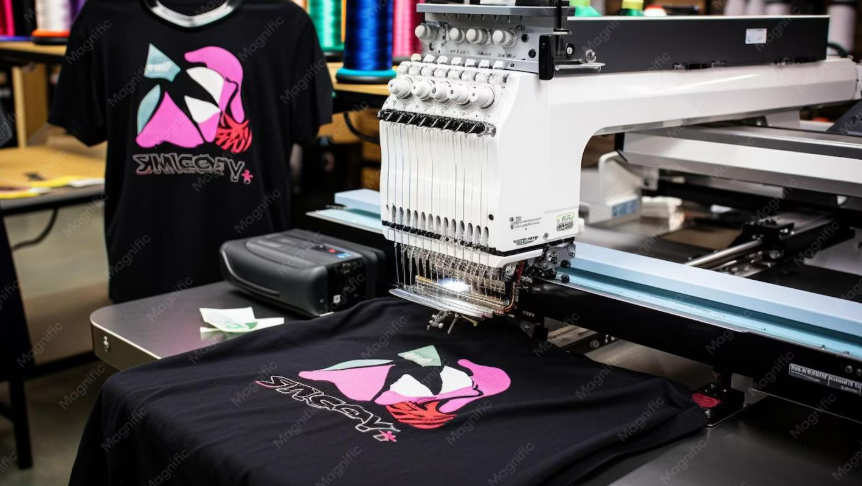
Other options still have their place. Sublimation works best on light polyester. Vinyl is useful for names, numbers and simple lettering. Embroidery is not printing, but it can suit uniforms when a stitched finish feels right.
The best method is not the newest one. It is the method that suits the artwork, fabric, quantity and how the shirt will be used.
Quality Control and Finishing Every Shirt
A shirt can look finished when the print lands on the fabric. In a careful shop, that is when the slower checking begins.
Placement is one of the first things to check. A chest logo that sits slightly off centre can make the whole shirt look wrong. Colour is checked too, especially if the customer approved a specific shade. The team also looks for lifting edges, blurred detail, heat marks, stains and prints that feel too stiff.
These flaws do not need to be dramatic. A customer may not know the technical reason something feels off. They just notice that it does.
Finishing gives the order its final shape. Loose threads are clipped. Shirts are sorted by size. Labels, sleeve prints and neck details may get a second look. Large orders are counted carefully because one missing size can cause trouble on delivery day.
This stage protects the customer as much as the printer. A crooked personal shirt is annoying. A crooked logo across staff uniforms can make a business look careless. Quality control is the last chance to catch the small things before they become someone else’s problem.
Packaging, Shipping and Getting the T-Shirt to the Customer
Packing should respect the work that came before it. A shirt can be printed beautifully, then feel rushed if it arrives creased, mixed with the wrong sizes or thrown into a box without care.
Bulk orders need order more than decoration. Shirts may be grouped by size, colour, team, department or design so the customer can hand them out without digging through piles. Retail orders need a different touch. Clean folding, simple labels, care cards and tidy mailers can make the shirt feel ready before it is worn.
Timing is part of this stage too. A shirt for a launch, match day, trade show or staff rollout has a real deadline. That’s not all because it is also why the more ideal strategic planning matters in a genuine light before any sort of production commences.
schedule needs room for approval, printing, curing, checking, packing and delivery. When every step is squeezed, mistakes find space.
Waste also deserves attention. Smaller runs, better stock planning, recyclable packing and sensible production choices can help reduce unsold shirts and unnecessary packaging. It works best when planned early, not treated like a last line added to a brand story.
Conclusion
A printed T-shirt feels simple only when the process behind it has been handled well. The idea, artwork, blank, print method, checks and delivery all leave a mark on the final piece. For shops improving production or comparing tools such as an inkjet printer for dtf, the smarter view is to judge the full journey from concept to closet, not the machine alone.