





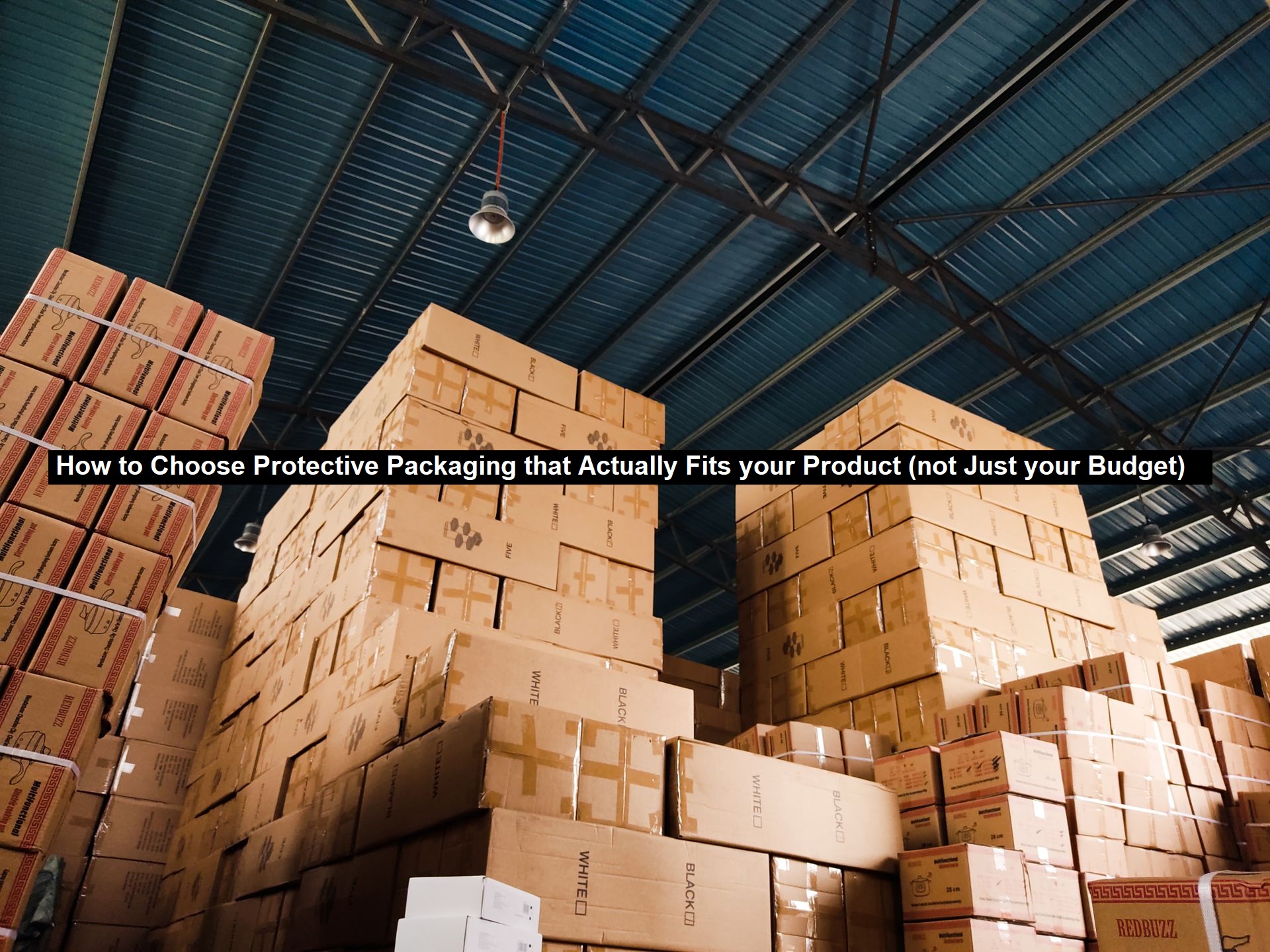
Most companies pick protective packaging by looking at cost per unit and calling it done. That works fine until a shipment comes back damaged, a customer complaint lands on someone’s desk, or a returns rate starts quietly eroding margins. Choosing the right protective packaging is less about finding the cheapest option and more about matching material properties to the specific stress a product faces in transit.
Here is a practical framework for getting that match right.
Start with the hazards, not the product
Before you look at any packaging material, map out what a shipment actually experiences. A pallet moving by LTL freight faces compression from stacking, vibration over hundreds of miles, and possible exposure to moisture. A small parcel shipped via a carrier hub gets dropped, tossed onto conveyor belts, and compressed under other boxes. A temperature-sensitive product faces all of that plus thermal fluctuation.
Write down the specific hazards for your shipping lane. Compression, shock, vibration, moisture, and static each call for different solutions. Foam-in-place works well for shock absorption on irregularly shaped items. Corrugated edge protectors address compression on palletized loads. Air pillows handle void fill in boxes but do almost nothing for impact on fragile corners.
Treating these as interchangeable is where most packaging decisions go wrong.
Understand the difference between cushioning and void fill
These two categories get conflated constantly. Void fill, things like paper pads, air pillows, and loose fill, exists to stop a product from shifting inside a box. It does not absorb meaningful impact. Cushioning, think molded foam, foam-in-place systems, or structured corrugated inserts, actually absorbs and redistributes energy from a drop or collision.
If your product is fragile, void fill alone is not enough. A glass item rattling around in a box stuffed with air pillows is still going to hit the box wall. You need a cushioned layer that decelerates the product before it transfers force.
For mid-market shippers who run diverse SKUs, a hybrid approach often makes the most sense: a formed corrugated insert or molded foam for the product itself, plus void fill to address any remaining space. Millennium Packaging Solutions maintains a practical breakdown of material categories worth reviewing if you are sorting out what falls under which function.
Factor in your damage rate and your return cost, not just material price
If you switch from formed foam inserts to a cheaper air pillow system and your damage rate goes from 0.5 percent to 2 percent, you may have saved fifteen cents per shipment and lost four dollars per unit in returns, restocking, and customer service time. The math rarely favors cutting corners on protection for high-value goods.
Get an actual number on your current damage rate before changing packaging. Talk to your warehouse team about what comes back and why. That data tells you more than any spec sheet.
Read: From Concept to Closet: The Life of a Printed T-Shirt
Account for automation compatibility early
A lot of protective packaging decisions get made without any conversation with the fulfillment or operations team. That creates problems when a new material does not run on existing equipment. Certain foam systems require dedicated dispensing machines. Some paper cushioning systems have minimum throughput requirements that do not make sense at low order volumes. Stretch film spec changes can require tension adjustments on automated wrappers.
If you are running any automated packing or wrapping equipment, loop in whoever manages that equipment before finalizing a material change. A fifteen-minute conversation can prevent a two-week operational headache.
Sustainability and performance are not mutually exclusive
There is a real perception that sustainable packaging means weaker packaging. That was more accurate ten years ago. Today, recycled-content corrugated performs comparably to virgin stock in most applications. Paper-based void fill and cushioning has improved substantially. Some biodegradable film options now match the clarity and seal strength of conventional materials.
The trade-off is usually cost, not performance. Sustainable materials tend to run slightly higher per unit, though that gap has narrowed. If sustainability is a priority, run a structured comparison on a single SKU before rolling anything out broadly. Measure damage rates, material usage per shipment, and cost per unit shipped side by side.
Document what you decide and why
Packaging decisions get revisited constantly because people forget the reasoning behind the original choice. Write down what problem you were solving, what you tested, and what the results were. When someone proposes switching materials six months later to save a few cents, that documentation makes the conversation faster and more grounded.
Protective packaging is not a glamorous line item, but it is one of the few areas where a bad decision shows up directly in customer experience and return costs. A little rigor up front saves a lot of headaches later.