




If you’re sourcing tablets from north India, you’ll probably end up comparing plants in Himachal Pradesh. Baddi and Nalagarh both sit in Solan district, and names from both towns tend to land on the same shortlist.
That’s handy. Plants close together are easy to visit in one trip, and every one of them can be asked the same questions.
Location only gets a plant onto the shortlist, though. The plant itself decides the rest. Whether you’re choosing a tablet manufacturing company for a first order or a fifth, here’s how I’d read the Baddi and Nalagarh belt, and what’s worth asking once you’re inside.
Why Himachal Pradesh comes up in tablet sourcing
Trade coverage describes Baddi as one of India’s prominent pharmaceutical manufacturing hubs. A cluster like that gives buyers choice. Several plants within driving distance mean you can compare them on lead times, minimum quantities and paperwork without crossing the country.
You’ll also read claims about tax incentives, transport links and climate. Some may hold up. Check each one against a government or industry source before it shapes a decision, since incentive schemes change over time.
What an address tells you, and what it leaves open
An address tells you where to look. It says little about what a plant can make, how it controls quality or how much capacity it has free.
Two plants a few kilometres apart can differ on dosage forms, equipment, approvals and documents. Location builds the list. Evidence cuts it down.
Start with a clear product brief
Before contacting any plant, write a one-page brief. Replies come faster, and quotes become easier to compare. A good brief covers:
- Product: composition, strength and tablet type (plain or film-coated)
- Pack: strip, blister or bottle, pack size and labelling needs
- Quantity: the first order and the repeat volume you expect
- Market: where the product will be sold
- Timeline: when stock needs to be in hand
Flag anything that needs special handling. A moisture-sensitive formulation, for example, may call for environmental controls the plant has to plan for before it accepts the order.
What a tablet plant should be able to show you
These items are worth requesting early, before price comes up:
- Approvals for your market: WHO-GMP, ISO 9001:2015 and any destination-specific licences, as dated copies
- Separate lines for antibiotics: dedicated blocks for beta lactam and cephalosporin products, apart from general tablets
- Its own QC lab: with records a buyer can review
- Development support: an R&D centre, if the formulation is new
A plant that’s proud of its set-up usually sends these without being chased.
How to read a certificate properly
A certificate is only useful if you read the details. Check the company name, the address, the date issued, the expiry date and the issuing body. Then look at the scope.
A certificate can cover one block and say nothing about another. For general tablets, the scope should match the general block. For antibiotic tablets, it should name the beta lactam or cephalosporin section.
If a manufacturer describes its certificates but never shows them, ask again. Most plants keep copies ready.
Why antibiotic tablets need their own production lines
Penicillin and cephalosporin products are usually made in dedicated blocks, away from general tablets. The aim is to keep traces of one product out of another.
For antibiotic tablets, ask how the plant keeps them apart. Separate buildings? Separate air handling? Separate teams? Specific answers are a good sign.
An example from the belt
Theon Pharmaceuticals gives a useful picture of how one plant in this belt grows. Its manufacturing unit is at Nalagarh and its corporate office is in Panchkula. According to the company’s site:
- 2007: commercial production started in the general and beta lactam sections
- 2008: cephalosporin tablets and capsules followed
- 2014: a dedicated general block opened for tablets, capsules, dry syrups, ointments and sachets, built to international GMP norms
- 2015: beta lactam and cephalosporin capacity grew, with separate QA, QC and canteen blocks
- 2016: an in-house R&D centre, approved by DSIR, came on stream
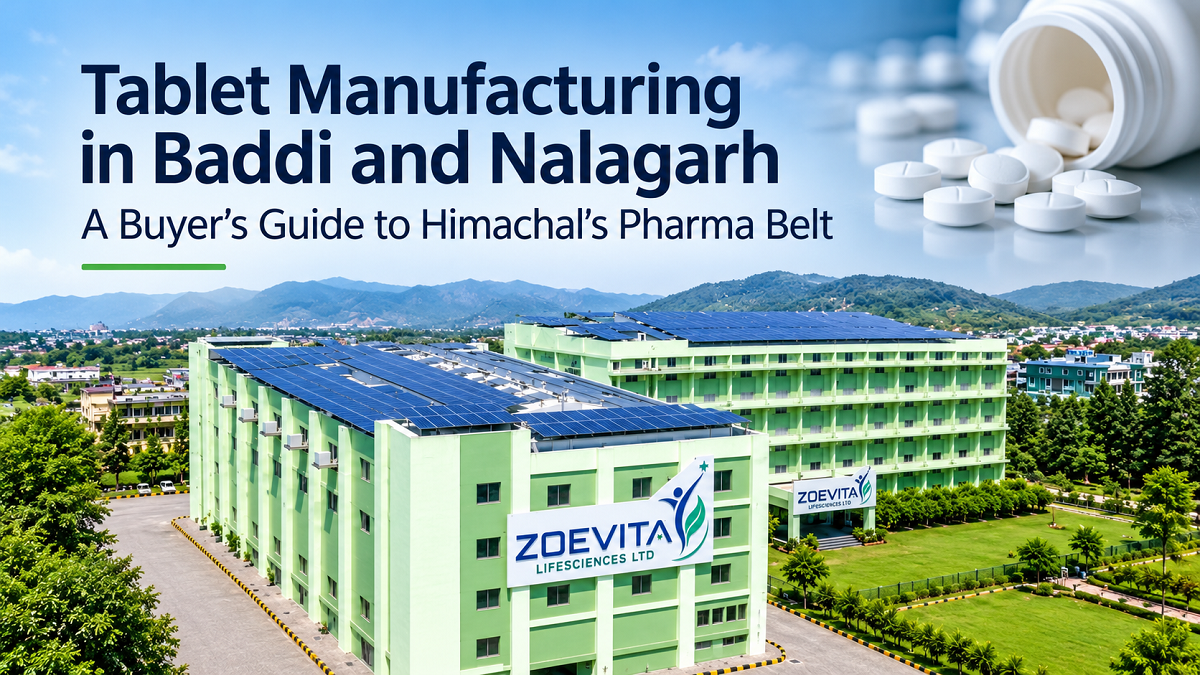
The group has since taken over a unit in Baddi, now run as Zoevita Lifesciences, which makes tablets, capsules and sachets. One group, several plants. That’s worth knowing as a buyer, because a quote can come from one site while the work happens at another. Ask which site, which block and which licence will cover your product, and get the answer in writing.
What to look at on a plant visit
The tour is where a plant either backs up its paperwork or doesn’t. Slow down and look at these:
- Material flow: raw materials, packing materials and finished goods should move through separate routes.
- Staff entry: there should be a clear gowning routine before anyone enters a production area.
- Storage and labelling: materials should be labelled, separated and easy to trace.
- The QC lab: staff should be able to show how a batch is tested and who signs it off.
- Cleanliness: floors, equipment and corners tell you more than a slide deck.
- How staff answer: operators and supervisors who explain their work easily are a good sign.
Photos help if the plant allows them, and notes written the same evening help more. By the second plant, details blur.
Read: How to Re-Pitch Your Expat Business When the First Round Fails
Documents worth asking for before you commit
Ask for a short pack of documents, not just a price list:
- Product specifications for your formulation
- A sample batch manufacturing record
- A sample certificate of analysis
- A summary of stability data, if the product has it
- The process for approving artwork and packaging changes
If a plant takes weeks to produce samples of its own paperwork, expect the same pace once an order is placed.
Questions to ask the plant
- Which block will make my tablets?
- Which approvals cover that block?
- How do you test each batch, and who signs it off?
- What happens when a batch fails a test?
- Which documents come with every batch?
- What’s the realistic lead time on repeat orders?
Short, specific replies are a better sign than long, polished ones.
If you’re exporting your tablets
Importers want paperwork that fits the destination: product permissions, labelling and regulatory dossiers. Ask the plant which markets it already supplies, who prepares the dossier and how long approvals have taken in the past.
A plant that has done it before can usually answer with specifics. One that hasn’t will give you a general reply, and you can plan around that.
Common mistakes buyers make
- Choosing on price alone: The lowest quote can hide extra charges for testing, packaging or documentation.
- Reading the certificate title and skipping the scope: The scope tells you which block and which product category it covers.
- Skipping the visit: A video tour can’t show gowning, material flow or how staff talk to each other.
- Not asking where the product is made: Groups with several plants can quote from one and produce at another.
- Leaving change control vague: Agree in writing who approves a change of supplier, artwork or packaging.
Most of these cost little to avoid, and they save a lot of back-and-forth later.
Common questions about tablet manufacturing in Himachal Pradesh
Is Baddi a pharmaceutical hub?
Trade coverage describes Baddi as one of India’s prominent pharmaceutical manufacturing hubs.
Is a plant in Baddi better than one in Nalagarh?
Neither location decides it. Plants should be compared on approvals, product range, quality records and capacity.
Can one company make both general and antibiotic tablets?
Some do, in separate blocks with separate controls.
What should I ask for first?
Certificates and a plant tour. Both tell you more than a price list.
How long should a plant visit take?
Long enough to see production, storage, the QC lab and the documents. Half a day is common, though it depends on the plant.
Before you shortlist
Location gets a plant onto the list. Certificates, records and a visit decide whether it stays there. When you reach that stage with a pharmaceutical manufacturing company, ask for the plant tour and the paperwork before the quote. What you see on the floor will tell you more than the brochure.